Answerable to Americans: Foreign Influence in Washington
Foreign governments spend heavily to shape American policy. Washington warned about it in 1796, and the laws meant to check it are full of gaps.
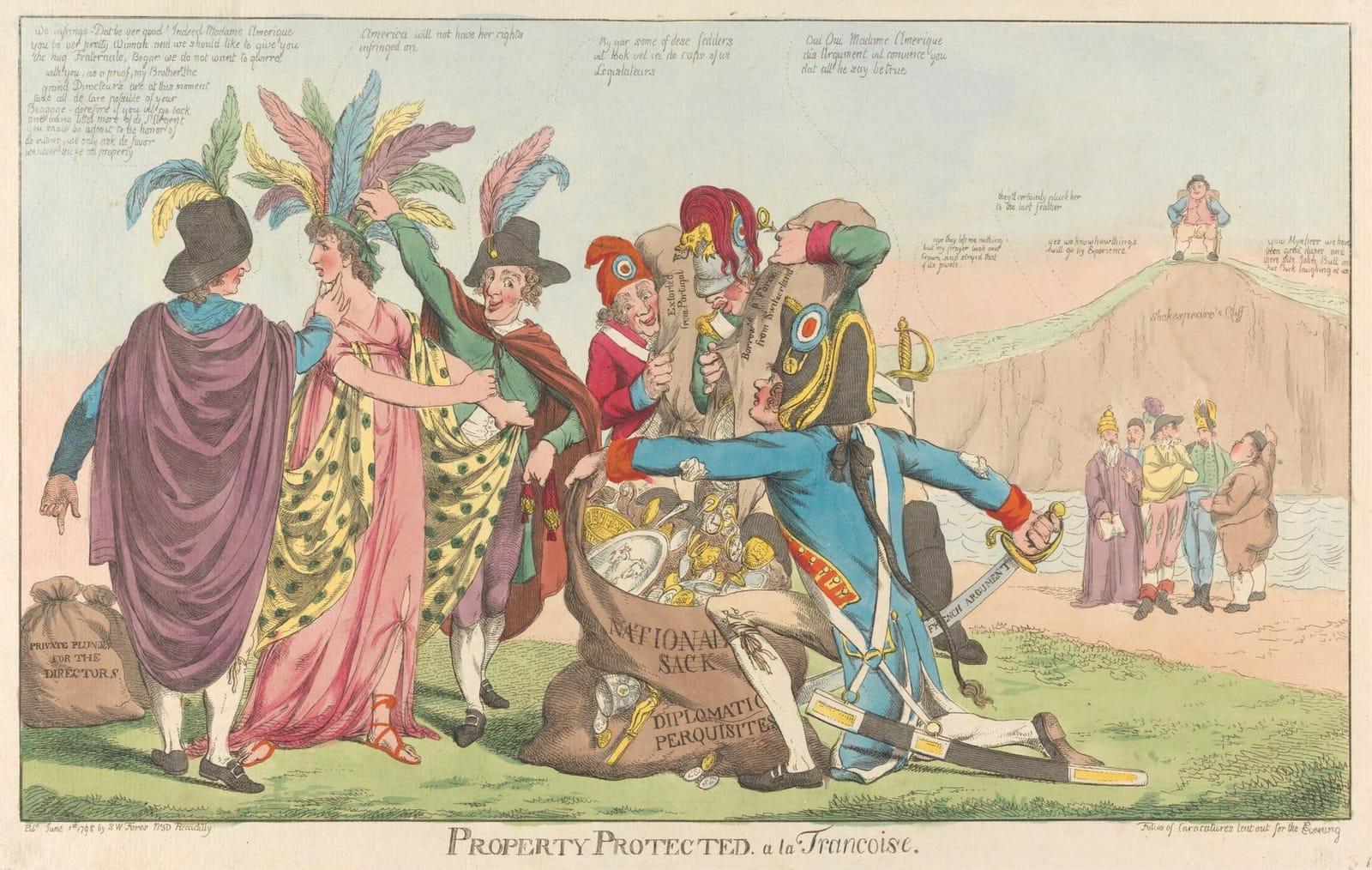
In 1797 three agents of the French government told American envoys in Paris that negotiations could begin only after a payment to the foreign minister, Talleyrand, and a large loan to France. When President Adams released the envoys' dispatches the following spring, with the agents' names replaced by the letters X, Y and Z, the country was outraged. "Millions for defense, but not one cent for tribute" became the toast of the year.
The founders feared foreign influence as much as any danger to the new republic. The Constitution bars federal officeholders from accepting any present, office or title from a foreign state without the consent of Congress. Washington gave the warning its best-known form in his Farewell Address.
“Against the insidious wiles of foreign influence (I conjure you to believe me, fellow-citizens) the jealousy of a free people ought to be constantly awake.”George Washington, Farewell Address, 1796
How influence works now
Today the methods are mostly lawful and largely public, which makes them easy to overlook. Foreign governments hire Washington lobbying and public relations firms, many of them staffed by former members of Congress, senior officials and retired officers. They fund think tanks and university programs whose work reaches policymakers. Foreign-owned companies run American subsidiaries whose political action committees, funded by American employees, give to candidates. Some governments also work through American advocacy groups that press their interests in the language of domestic politics.
Much of this is legal, and some of it is useful. Allies and trading partners are entitled to make their case. The trouble starts when the advocacy is hidden, when officials trade public service for foreign paychecks, or when a foreign government's interests quietly displace the American interest in decisions about war, trade and arms.
The gaps in the law
Congress passed the Foreign Agents Registration Act in 1938, when Nazi Germany was spreading propaganda in the United States. FARA requires people who act for foreign principals in American politics to register with the Justice Department and disclose their work and their pay. For decades it was barely enforced. A 2016 audit by the Justice Department's inspector general found weak oversight, late and incomplete filings, and very few prosecutions.
Other gaps are written into the law itself. Agents for foreign companies can usually register under the weaker Lobbying Disclosure Act instead of FARA, even when the company's interests are closely tied to its home government. Former members of Congress face only a temporary cooling-off period before lobbying their old colleagues, and no permanent bar on representing foreign governments. Universities must report large foreign gifts and contracts, though compliance has been uneven, and think tanks face no comparable federal disclosure rule.
When it crosses the line
The cases that reach court show what is at stake. In July 2024 a federal jury in New York convicted Senator Robert Menendez of New Jersey, a former chairman of the Senate Foreign Relations Committee, on corruption charges that included conspiring to act as an agent of the government of Egypt. Most influence never comes near a courtroom, which is why clear rules and full disclosure matter more than occasional prosecutions.
What America First requires
America First means that American officials answer to American citizens. The principle applies to every foreign government, friend and rival alike. An ally's interests and ours often line up, and when they do we should act together. When they diverge, the American interest comes first, and no lobbying campaign should be able to change that.
- Bar former members of Congress, senior executive officials and retired general and flag officers from ever working for a foreign government.
- Close the loophole that lets agents of foreign interests register under the Lobbying Disclosure Act instead of FARA.
- Fund FARA enforcement properly and publish filings promptly in a searchable form.
- Require think tanks and advocacy groups that lobby Congress to disclose foreign government funding above a modest threshold.
- Enforce the existing rules on reporting foreign gifts to universities.
- Judge votes on war, trade and arms sales by whether they serve Americans, whoever is asking.
The Society's Congressional Scorecard includes a foreign influence category, graded on members' recorded votes on proposed sales of American arms to foreign governments.
More from the Journal
All entries
Venezuela and Iran: Two Uses of American Power
The Society backed one and opposes the other. The reason is a single test, and procedure has little to do with it.
Ships for a Sea Power: Rebuilding American Shipbuilding
The country that built more than 2,700 Liberty ships in four years now builds a fraction of one percent of the world's commercial ships. Policy Brief No. 2 sets out how to change that.
The American System: Tariffs and Industry as National Strategy
From Hamilton to McKinley, the United States built its industrial strength on purpose. The tradition is older and more practical than its critics admit.